


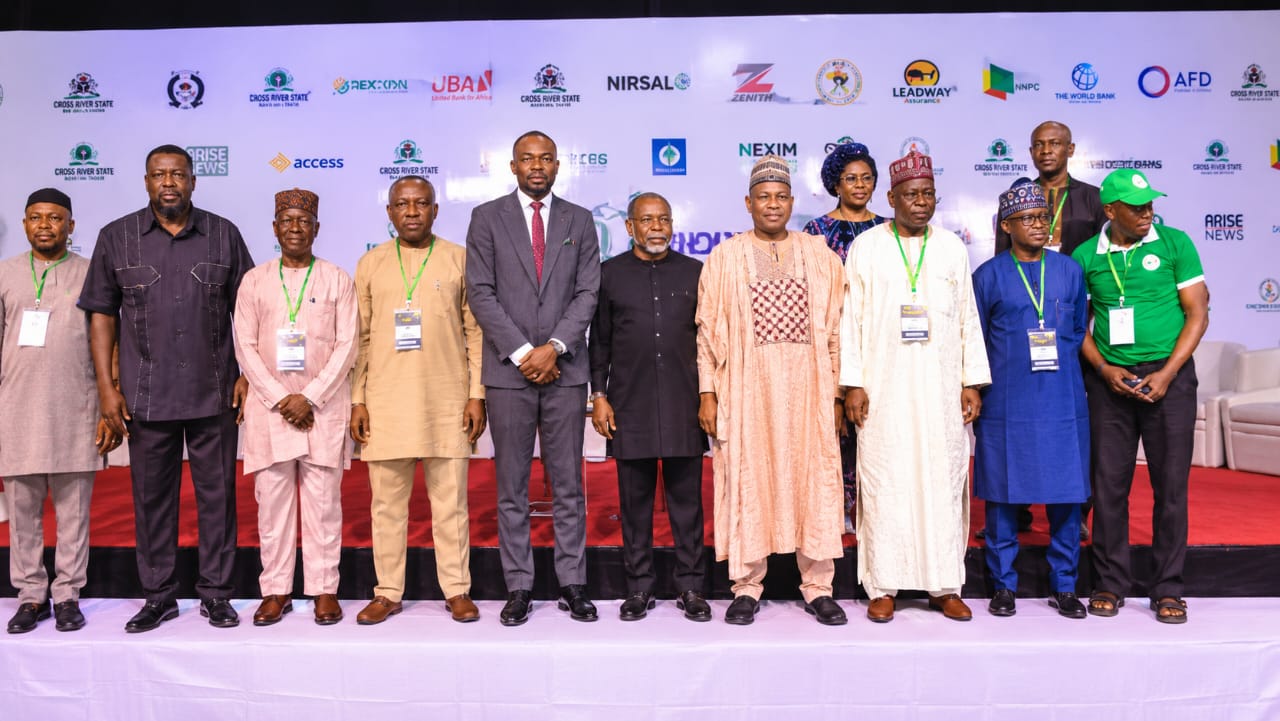
By Chinaza Onwa
The Chairman of Autodex Nigeria Limited and FARMFATECH 2026 Organising Committee, Dr. Nnamdi Ezeani has identified agricultural finance as one of the most important issues requiring urgent attention, noting that every stage of the agricultural value chain requires adequate capital.
Ezeani disclosed this at the ongoing 3rd edition of the Farm, Food and Allied Technologies Expo (FARMFATECH 2026) with the theme, “Driving Agricultural Industrialisation: Local Manufacturing, Technology Transfer and Export for Africa’s Prosperity” organised by Autodex Nigeria Limited in Abuja.
He advocated an integrated approach to agricultural financing that recognises the realities of agricultural production, seasonal cash flows, market demand and the risks associated with different agriculture value chains.
He said, “farmers need financing for land preparation, improved seeds, fertilisers, irrigation, machinery and labour, while processors require capital for equipment, working capital, packaging and quality assurance.
“Exporters need financing for commodity aggregation, certification, transportation, storage and international market development.
“However, these financing requirements are often considered separately, making it difficult to develop commercially sustainable agricultural enterprises’’.
He called on development finance institutions, commercial banks, government-backed agricultural financing programmes, investors and insurance providers to collaborate in developing financing models that support identifiable agricultural opportunities, credible businesses, appropriate technologies and verifiable markets.
On technology transfer and digital agriculture, Ezeani said modern agricultural development was increasingly dependent on mechanisation, irrigation, renewable energy, improved storage systems and digital technologies.
He identified solar-powered agricultural systems, modern dryers, warehouses, cold-chain facilities and digital platforms as important tools for improving productivity, reducing post-harvest losses and strengthening agricultural businesses.
However, he warned that technology transfer must go beyond displaying machinery or importing finished products.
He advocated international partnerships that would encourage local assembly, technical training, after-sales services, maintenance capacity, spare-parts availability and the gradual development of domestic manufacturing capabilities.
He also called for agricultural equipment to be adapted to the specific requirements of Nigerian farmers, noting that smallholder farmers, commercial farms, cooperatives, processors and agricultural service providers have different operational needs.
On post-harvest management and export development, Ezeani said Nigeria must strengthen its capacity to preserve, process, package and deliver agricultural products to markets in good condition and within the required timeframes.
He described post-harvest losses as lost income for farmers, wasted resources for producers and processors, and reduced food availability for consumers.
He called for increased investments in storage, drying, refrigeration, cold-chain logistics, food processing and modern packaging, while emphasising the need to strengthen product quality, traceability and certification systems.
He challenged participants to move beyond exchanging business cards and instead establish meaningful commercial relationships capable of delivering measurable results.
“The success of Farmfatech should not be measured only by the number of exhibitors or visitors who attend. It should also be measured by the partnerships established, investments mobilised, technologies adopted, businesses supported and opportunities created for Nigerian farmers and agribusinesses,” he stated.
In his remarks, the Managing Director of Autodex Nigeria Limited and lead creator of FARMFATECH, Prince Tony Ifeakandu, reiterated the need for Nigeria and other African countries to move away from excessive dependence on imported finished agricultural equipment towards domestic manufacturing, technology development and industrial capacity building.
He said agriculture must move beyond subsistence production to become a major driver of industrialisation, employment, wealth creation and economic growth.
Ifeakandu disclosed that Autodex Nigeria Limited had expanded its industrial operations beyond vehicle assembly to include agricultural machinery assembly, local fabrication, renewable energy solutions and other manufacturing activities.
He revealed that the company had established a completely knocked-down (CKD) farm tractor assembly plant in Nigeria, covering four-wheel tractors and hand tillers, with an annual production capacity of approximately 4,000 tractors and 8,000 hand tillers.
According to him, Autodex is also involved in the assembly of cars, vans, pickups, buses, trucks and tricycles, while its local fabrication activities include flatbed dryers, beehives and critical spare parts.
The company, he added, has investments and operations in electric tricycles, electric bikes, paint manufacturing and solar power solutions.
He described the company’s industrial vision as one in which Nigeria would no longer remain merely a consumer of imported agricultural technology but would gradually become a manufacturer and developer of the technology required to drive its agricultural transformation.
“Our vision is simple: Nigeria must not remain merely a consumer of imported agricultural technology; we must become a manufacturer and developer of that technology,” he said.
He maintained that agricultural mechanisation was fundamental to increasing productivity, reducing production costs and achieving food security, stressing that Nigerian farmers required affordable tractors, irrigation systems, planters, harvesters, dryers and processing equipment.
He, however, cautioned that providing machinery alone would not address the challenges of agricultural mechanisation without accessible financing, equipment leasing arrangements, maintenance facilities, spare-parts availability and trained equipment operators.
He therefore called for stronger collaboration among government institutions, development finance institutions, commercial banks and private investors to establish a sustainable financing and technical support ecosystem for agricultural machinery.
He encouraged Nigerian agribusinesses to prepare for emerging environmental and traceability requirements rather than wait until compliance becomes a barrier to trade.
“For Nigeria, the opportunities extend beyond meeting domestic agricultural machinery requirements to developing the capacity to serve other African markets through manufacturing, assembly, distribution, maintenance, sustainable technology and mechanisation services.
“With its emphasis on local manufacturing, technology transfer, finance, sustainability and export development, FARMFATECH 2026 is expected to provide a platform for advancing these objectives through business engagements, investment discussions, technology exhibitions and institutional partnerships,’’ he added.
Similarly, the Manager, Clients Relations, Anglophone West Africa, African Export-Import Bank (Afreximbank), Mr. Otitodilichukwu Onuegbu, emphaised that Africa’s continued dependence on exporting unprocessed agricultural commodities was undermining its capacity to create wealth, industrialise and compete effectively in international markets.
He noted that the continent’s agricultural challenge was not simply inadequate production or access to credit, but its inability to transform abundant raw materials into processed, packaged and branded products capable of commanding higher prices.
Onuegbu said Africa must move away from its traditional position at the lower end of global value chains and prioritise domestic processing, industrial manufacturing and value addition.
He noted that producing more agricultural commodities without building the capacity to process, aggregate, transport and market them would perpetuate the continent’s economic disadvantages.
According to him, the critical financing gap is the failure to fund the entire agricultural ecosystem rather than concentrating lending on individual farmers.
He explained that financing production without aggregation creates bottlenecks, just as funding processing facilities without adequate working capital could leave factories underutilised.
Similarly, financing exporters without reliable supplies, established markets and payment arrangements exposes the entire value chain to commercial risks.
Onuegbu said Afreximbank was promoting an integrated financing model covering production, aggregation, processing, logistics and market access.
He identified instruments including equipment financing, working capital, warehouse and inventory financing, receivables financing, guarantees and risk-sharing arrangements as necessary to unlock agricultural industrialisation.
In his remarks however, Minister of Agriculture and Food Security, Senator Abubakar Kyari, advocated a mechanisation-as-a-service model under which farmers would access tractors, harvesters, irrigation equipment and other machinery through commercially viable service providers rather than having to purchase expensive equipment individually.
He also urged financial institutions to develop specialised financing products for agricultural machinery, insisting that equipment should be regarded as productive assets capable of generating income and supporting agricultural expansion.
The minister further highlighted the government’s plan to attract private-sector participation in community cold-chain enterprises and food storage ventures to reduce post-harvest losses and create employment.
He said establishing agro-processing facilities closer to rural production centres would reduce transportation costs, minimise spoilage, improve farmers’ earnings and provide industries with more reliable supplies of raw materials.
Kyari who maintained that the success of agricultural industrialisation should be measured by investments mobilised, financing agreements, concluded that technologies transferred and machinery deployed to farms should be the essence, rather than the number of equipment displayed at exhibitions.