


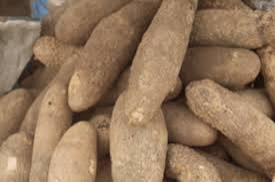
Yams have been sitting in the produce aisle for generations, often overlooked. So why are scientists talking about them now? Researchers are testing whether compounds in some yams could play a role in brain health, including a 2024 randomized trial that tracked cognition and blood biomarkers in people with mild cognitive impairment and mild Alzheimer’s disease.
Yams are also a major staple crop, with Nigeria producing about two-thirds of the world’s supply, according to a World Bank brief. The bigger point is less about miracle claims and more about what a fiber-rich, minimally processed tuber can do for healthier diets and food security.
A staple crop that feeds millions
Yams are starchy tubers grown predominantly in West Africa, and they sit at the center of everyday meals for many families. Nigeria is the world’s largest producer and contributes roughly two-thirds of global yam production, a reminder that this is not a niche “health food” but a true staple.
The World Bank brief drew on survey data from about 5,000 households, and it found yam eating was higher after harvest than after planting. It also showed gaps between richer and poorer households, which hints that access and price still shape who gets this food most often.
There is a practical catch that gets lost in the hype cycle. The report notes that yams can be expensive to produce because planting and harvesting require significant labor and seed tubers can be costly and limited.
What counts as a yam
“Yam” is an umbrella term for edible tubers from the genus Dioscorea, a group with many cultivated species. In Spanish, you’ll often see them called “ñame,” and around the world they show up as white yam, yellow yam, purple yam, and more.
In the United States, the name gets messy because “yam” is sometimes used on labels for orange-fleshed sweet potatoes, even though they are different plants. And not every Dioscorea is dinner – air potato (Dioscorea bulbifera) is an invasive vine in parts of the country that agencies warn can displace native plants.
It also helps to separate yams from other starchy roots that share the same dinner-table roles. Cassava contains cyanogenic glycosides and can cause poisoning if it is not properly detoxified through processing such as soaking and drying before it is eaten.
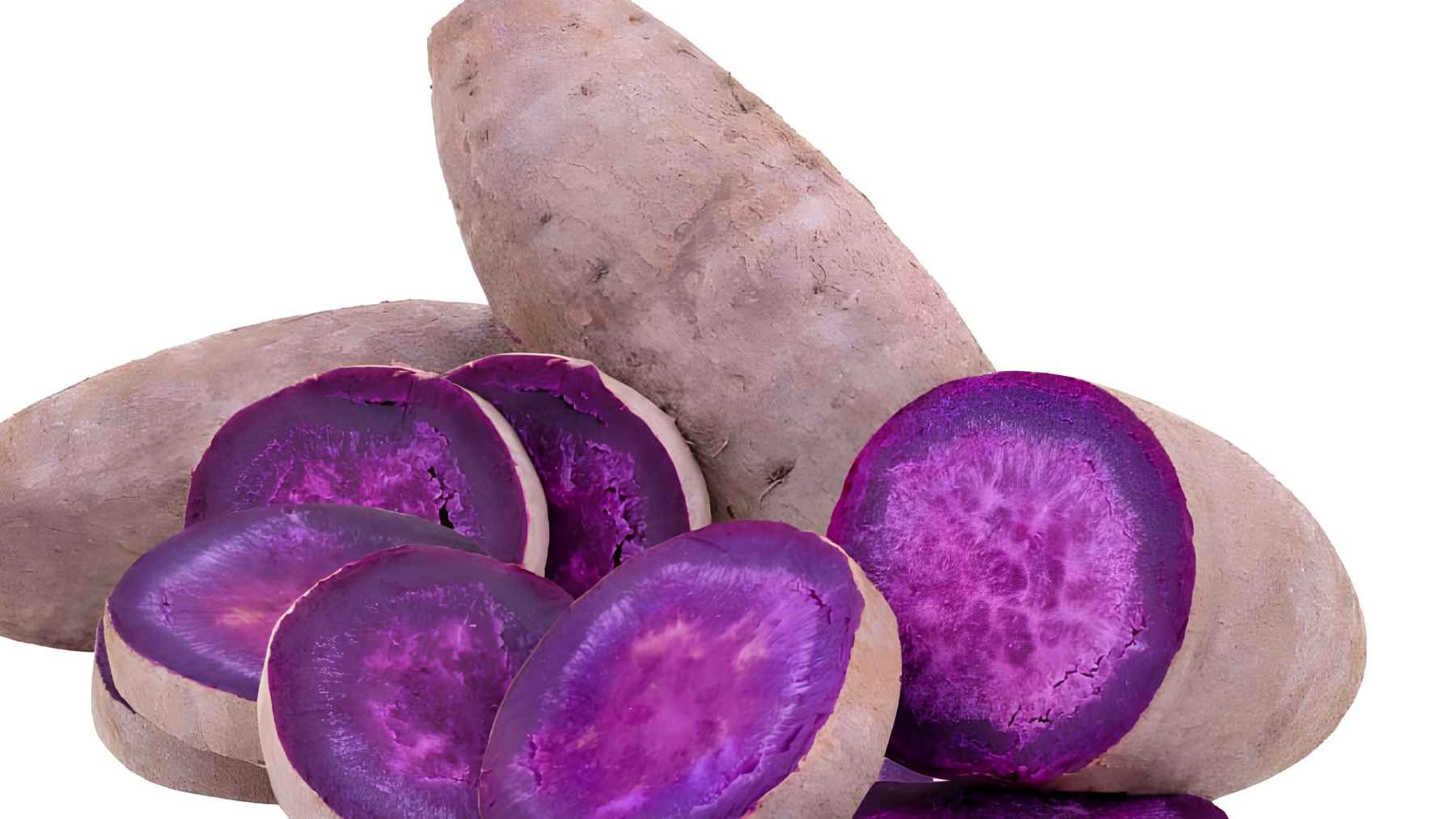 Purple yams, rich in nutrients and natural compounds, are being studied for their possible role in supporting memory and neural function.
What you get in a 3.5-ounce serving
A 3.5-ounce (100-gram) serving of raw yam provides about 118 calories, nearly 28 grams of carbohydrate, 4.1 grams of fiber, and 1.5 grams of protein, with very little fat and only about 9 milligrams of sodium. It also delivers around 816 milligrams of potassium, plus vitamin C and vitamin B6.
In plain terms, it can be the kind of base ingredient that feels filling, whether it ends up in a soup pot or roasted on a sheet pan. That fiber also supports regular digestion, which is one reason whole roots tend to be more satisfying than refined starches.
Of course, the prep still matters. A baked yam with herbs is not the same as a bag of yam chips, and the difference shows up in added oils, salt, and how quickly you can accidentally eat a lot of it.
The brain research behind diosgenin
One reason yams keep popping up in labs is diosgenin, a naturally occurring compound found in some Dioscorea species. In preclinical work, researchers have linked diosgenin to memory-related effects and to pathways involved in axonal growth.
The biggest recent headline comes from a randomized controlled trial published in August 2024 in the journal Phytomedicine Plus.
Patients with mild cognitive impairment or mild Alzheimer’s disease took a diosgenin-rich yam extract or a placebo for 24 weeks, and the authors reported modest improvements in some cognitive test domains along with changes in plasma neurofilament light chain.
Earlier human work points in the same general direction, with caveats. A 2017 placebo-controlled, randomized, double-blind crossover study in 28 healthy volunteers reported that older participants improved on a standardized cognitive test battery after taking a diosgenin-rich yam extract, and the authors reported no adverse effects.
Blood sugar and gut health depend on the details
Yams are rich in starch, but not all starch behaves the same once it hits your gut. In a 2024 review focused on Chinese yam, researchers describe how a higher amylose-to-amylopectin ratio can slow digestion, and they summarize evidence linking resistant starch to more favorable glucose and lipid responses.
Still, the kitchen matters as much as the chemistry. Boiled or steamed yam is a very different food than deep-fried yam chips, and that changes how fast the meal is absorbed.
If you are watching blood sugar, a simple approach often works. Keep portions reasonable, pair yam with fiber-rich foods like beans and vegetables, and check how your body responds, especially if you have diabetes or prediabetes.
Good food, but not a free pass
Yams are also studied for antioxidant and anti-inflammatory activity, which is where some of the cancer-prevention talk comes from. A 2014 animal study reported that yam strengthened antioxidant defenses and modulated inflammatory mediators in a rat model of colon carcinogenesis, but that is not the same as proving a protective effect in humans.
Human hormone findings add another layer of nuance. In a 2005 study of healthy postmenopausal women, replacing a large share of staple foods with about 14 ounces (390 grams) of yam per day for 30 days was associated with changes in estrogen-related measures and antioxidant status.
A whole yam on your dinner plate is food, while concentrated extracts are closer to supplements, and those are not interchangeable in dose, effect, or risk, especially for people with hormone-sensitive conditions. Researchers are still following the thread.
The study was published on ScienceDirect.