


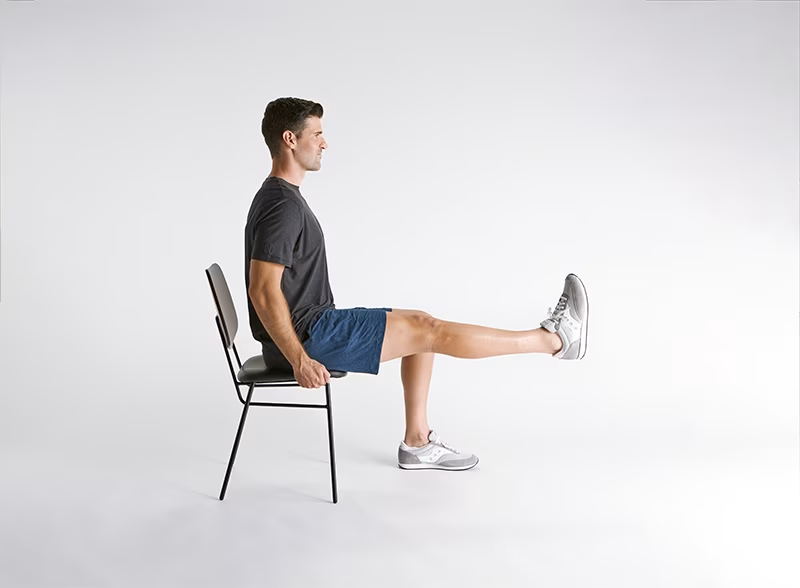
While a temporary rise in blood sugar after a meal is normal, there are things you can do to prevent extreme fluctuations, including one that doesn’t require you to leave the table. Research suggests that seated calf raises, also called soleus push-ups, can help stabilize post-meal blood sugar. The soleus is a muscle in the calf, and is especially good as using glucose in the blood stream.
What The Research Shows
According to a 2025 study, interrupting prolonged sitting with three minutes of soleus push-ups every 30 minutes can reduce insulin response by 26%.1
In that same study, the soleus push-up, non-weight-bearing resistance activities, and stretching exercises were all found to have the potential to significantly improve glucose regulation, insulin sensitivity, and vascular function in those unable to perform traditional weight-bearing exercise.
“The results of the study are really quite remarkable because previously we suspected you needed to walk to stabilize post-meal blood sugar,” said Ashley Katzenback, PT, DPT, a doctor of physical therapy and the owner of Cape Concierge Physical Therapy. “This study concluded that simple interventions that can be performed while seated are more than enough to do the trick.”
Another small study from 2022 had participants consume a glucose drink and then perform soleus push-ups for extended periods, totaling 270 minutes, with no more than 4 minutes of sedentary breaks.2
Glucose spikes were reduced by roughly 52% compared to sitting over the 180-minute period where glucose responses were measured, with an average difference of 19 mg/dL in glucose concentrations already visible at 30 minutes. The effect appeared gradual and cumulative over time.
“Seated calf raises after a carbohydrate-rich meal can indeed help lower post-meal glucose, and they are able to mitigate glucose excursions substantially, with little increase in energy expenditure,” said Sara K. Rosenkranz, MS, PhD, an associate professor of kinesiology and nutrition sciences at the University of Nevada, Las Vegas.
Why Is the Calf Linked to Blood Sugar?
The soleus—part of the calf muscle—is highly oxidative and endurance-oriented, relying less on stored glycogen than many other muscles, Rosenkranz explained. Even at low intensities, it continuously uses glucose.
“Mechanistically, the soleus muscle can sustain low-intensity activity for long periods and steadily use glucose, despite how little muscle mass it represents proportionally to the whole body,” she said.
Katzenback said she often tells patients that the calf is the “heart of the lower extremities” because it pumps blood from the lower legs back towards the heart. When this muscle is activated, it gradually pulls glucose from the bloodstream, thereby reducing blood sugar spikes.
Related Stories
:max_bytes(150000):strip_icc():format(webp)/running-in-cokd-GettyImages-478002342-49b4bc9550114e12a85b82b29f403000.jpg)
:max_bytes(150000):strip_icc():format(webp)/VWH-GettyImages-1448002388-768fc8d168b4430d9097379318529b4f.jpg)
How Many Calf Raises Should You Do?
Katzenback said it’s hard to pinpoint an exact number of calf raises needed to reduce blood sugar spikes. The research describes soleus push-ups as sustained contractions rather than individual repetitions, suggesting the movement should be performed continuously over time.
By comparison, post-meal walking is much better studied, Rosenkranz said. Research shows that 10–15 minutes after a meal, starting about 15 minutes after, can lower peak glucose by about 10–30 mg/dL, with one 2023 study showing a 27 mg/dL difference.3 Some evidence shows that as little as 2 minutes of walking can have a significant beneficial effect.4
“Seated calf raises can help reduce post-meal glucose, especially if you’re stuck sitting,” Rosenkranz said. “However, any post-meal movement is beneficial, and walking or using larger muscle groups is likely more efficient overall as well as more effective for improving other health outcomes.”